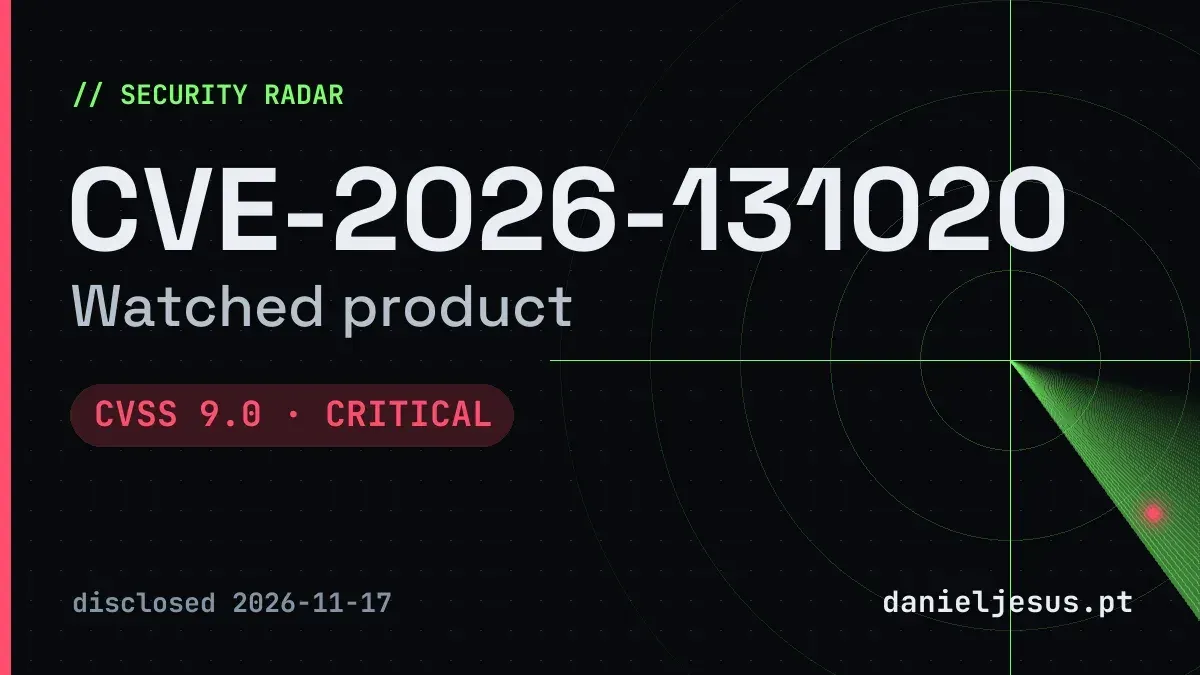
CVE-2026-131020: Use After Free Vulnerability in WebView of Google Chrome
A vulnerability in WebView of Google Chrome allows for arbitrary code execution.
// on this page (8)
Introduction
The CVE-2026-131020 vulnerability pertains to a use after free issue in the WebView of Google Chrome, which can allow a remote attacker to execute arbitrary code outside the sandbox via crafted network traffic.
What happened?
This vulnerability was identified in the WebView of Google Chrome on Android devices prior to version 158.0.8127.36. The flaw occurs due to improper memory management, which can be exploited to compromise system security.
How does the vulnerability work?
The concept of use after free refers to a situation where a program continues to use a pointer to an object that has already been freed. In this case, the WebView of Google Chrome did not manage memory correctly, allowing an attacker to send specially crafted network traffic that could lead to unauthorized code execution.
What is the real impact?
The impact of this vulnerability is considered critical, as it allows for arbitrary code execution, which can compromise the integrity, confidentiality, and availability of the affected system. Users who do not update to the fixed version may be at risk of attacks exploiting this flaw.
Which versions are affected?
- Google Chrome for Android: versions prior to 158.0.8127.36
How to fix
- Check the version of Google Chrome installed on your Android device.
- Update Google Chrome to version 158.0.8127.36 or higher via the Google Play Store.
- Ensure all security updates are regularly applied.
Mitigation while you update
While it is not possible to update, consider limiting the use of WebView or disabling features that may allow remote code execution. Additionally, avoid opening suspicious links or those from untrusted sources.
Conclusion
The CVE-2026-131020 vulnerability in the WebView of Google Chrome poses a significant risk to the security of Android devices. It is crucial for users to update to the fixed version to protect their systems against potential attacks.
// Fontes
- NVD — CVE-2026-131020 nvd.nist.gov ↗
- CVE.org — CVE-2026-131020 cve.org ↗
- chromereleases.googleblog.com (vendor advisory) chromereleases.googleblog.com ↗
- issues.chromium.org issues.chromium.org ↗