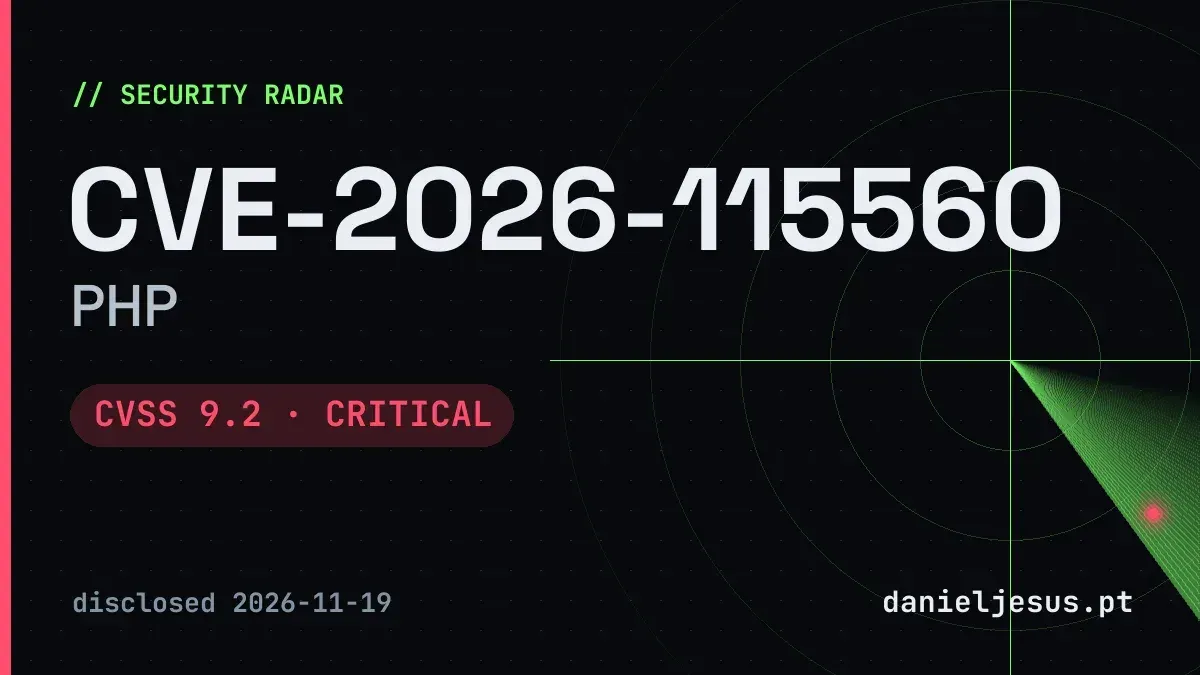
CVE-2026-115560: Critical Vulnerability in PHP
A vulnerability in PHP may lead to remote code execution.
// on this page (8)
Introduction
The CVE-2026-115560 vulnerability affects multiple versions of PHP and can allow for remote code execution due to a session serializer mismatch issue.
What happened?
When session upload progress is enabled, it is possible to store attacker-controlled data in a session key using the php_binary or php_serialize session serializer. If the same session is later read with the php serializer, due to a change in session.serialize_handler at runtime or differences between applications sharing a session store, bytes inside the key can be passed to the unserializer.
How does the vulnerability work?
A remote attacker able to submit a multipart upload can inject objects, which may lead to code execution when the reading application contains a suitable gadget chain, or to session corruption or denial of service.
What is the real impact?
The impact of this vulnerability is critical as it can allow an attacker to execute arbitrary code on the server, compromise application integrity, and cause service disruptions.
Which versions are affected?
- PHP 8.2.* before 8.2.36
- PHP 8.3.* before 8.3.37
- PHP 8.4.* before 8.4.28
- PHP 8.5.* before 8.5.13
How to fix
- Check the version of PHP you are using.
- Upgrade to a patched version of PHP as indicated in the vendor advisory.
- Consider disabling session upload progress functionality until the upgrade is performed.
- Review your code to ensure there are no dependencies on insecure serializers.
Mitigation while you update
While an update is not possible, it is recommended to disable session upload progress functionality and monitor the application for suspicious activity.
Conclusion
The CVE-2026-115560 vulnerability poses a significant risk to PHP applications. It is crucial for system administrators and developers to take immediate action to mitigate the risks associated with this flaw.
// Fontes
- NVD — CVE-2026-115560 nvd.nist.gov ↗
- CVE.org — CVE-2026-115560 cve.org ↗
- GitHub github.com ↗