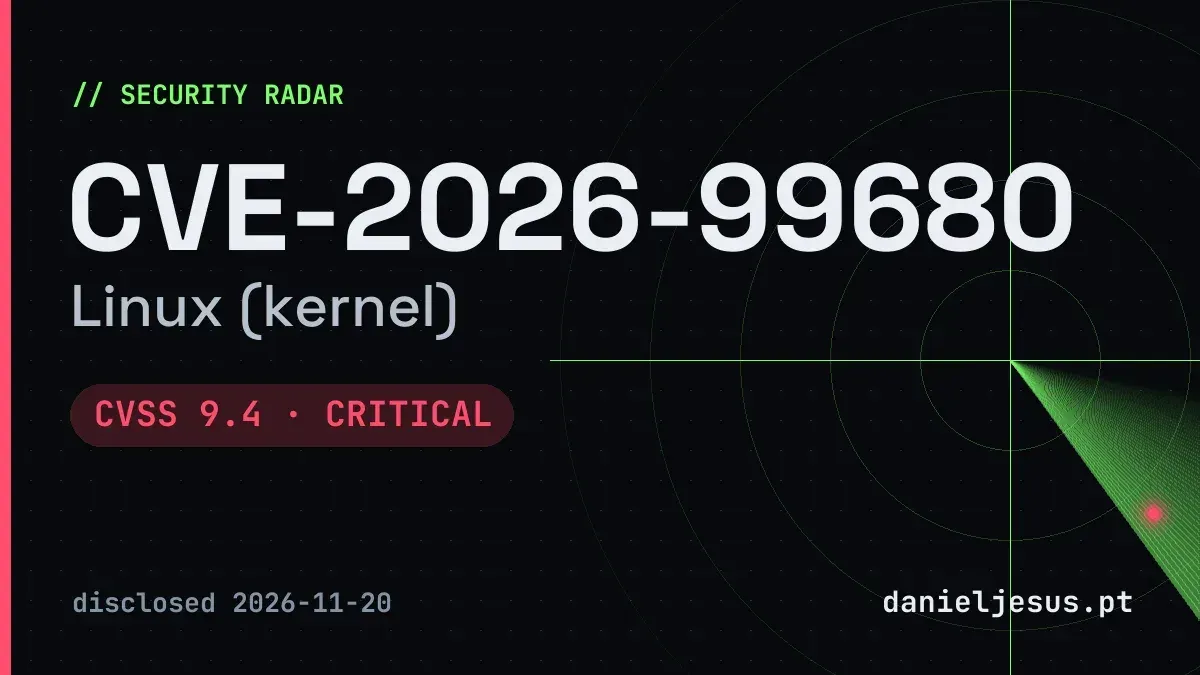
CVE-2026-99680: Critical Vulnerability in Linux Kernel
A critical vulnerability has been identified in the Linux kernel, affecting inode management in the XFS file system.
// on this page (8)
Introduction
A critical vulnerability has been identified in the Linux kernel, related to inode management in the XFS file system. This flaw can have a significant impact on the security and integrity of stored data.
What happened?
The vulnerability resides in how the XFS file system handles inode preallocation for write layouts that extend beyond the end of the file (EOF). The method xfs_fs_map_blocks() marks the inode with the XFS_DIFLAG_PREALLOC flag only when it allocates blocks for a write layout. However, a write layout that goes past EOF can also distribute allocated blocks, such as speculative preallocation. The blockgc process can then free these blocks under the layout, allowing another file to receive them.
How does the vulnerability work?
The vulnerability occurs when the management of allocated blocks is not properly controlled. When a write layout ends beyond the EOF, blocks that should be exclusive to a particular inode may be assigned to other inodes, compromising data integrity and potentially exposing sensitive information.
What is the real impact?
The impact of this vulnerability is considered critical, as it can lead to data corruption and unauthorized exposure of information. Users relying on the XFS file system for storing sensitive data are particularly at risk.
Which versions are affected?
- Versions of the Linux kernel using the XFS file system (specific details to be confirmed in the vendor advisory).
How to fix
- Check the version of your Linux kernel and identify if it is affected.
- Update to the latest version of the Linux kernel that addresses this vulnerability.
- Consult the vendor's security advisories for detailed information on the fix.
Mitigation while you update
While it is not possible to apply the update, it is recommended to:
- Monitor the system for anomalous behavior that may indicate exploitation of the vulnerability.
- Limit access to critical systems using the XFS file system.
- Perform regular backups of data to prevent loss in case of corruption.
Conclusion
The CVE-2026-99680 vulnerability in the Linux kernel poses a significant risk to data security. It is crucial for system administrators to take immediate action to address this flaw and protect their systems.
// Fontes
- NVD — CVE-2026-99680 nvd.nist.gov ↗
- CVE.org — CVE-2026-99680 cve.org ↗
- Linux kernel (git) git.kernel.org ↗
- Linux kernel (git) git.kernel.org ↗
- Linux kernel (git) git.kernel.org ↗
- Linux kernel (git) git.kernel.org ↗