// case study — 2020
Sabor de Casa
Development of Sabor de Casa, a custom-built web platform for the restaurant industry. A bespoke software project focused on restaurant profiles, digital menus and connecting hospitality businesses with consumers through a dedicated online experience.
DevelopmentMaintenanceMicroservicesPerformance OptimizationSecuritySystems Administration
 // client — Bora Lá →

// on this page (9)
Sabor de Casa was a bespoke software development project created for the restaurant and hospitality sector, designed to connect food establishments and consumers through a dedicated digital platform.
Originally available at sabordecasa.pt, the project focused on providing restaurants with an online presence and making their menus and dining information more accessible to customers.
Rather than relying on an existing E-commerce system or a conventional content management platform, Sabor de Casa was built as a custom web application, with a structure specifically designed around the requirements of the restaurant industry.
The project combined web development, information architecture and digital user experience within a specialist platform.
A Platform Designed for the Restaurant Industry
The restaurant industry has digital requirements that differ from those of conventional retail businesses.
Restaurants need to present their identity, communicate their food offering, display menus and provide customers with useful information before they visit.
Sabor de Casa was conceived to address these needs through a dedicated digital environment.
The platform brought together restaurant-related content and made it easier for consumers to explore participating establishments and their menus.
Its concept focused on improving the connection between restaurants and potential customers through technology.
This sector-specific approach helped distinguish the project from conventional websites and general-purpose online stores.
Bespoke Software Development
One of the project's defining characteristics was its custom-built technological foundation.
Instead of adapting a generic E-commerce platform, Sabor de Casa was developed around the specific requirements of a restaurant-focused digital service.
Bespoke development involves defining the application architecture, organising information, designing the user experience and implementing the software components needed to support the business model.
For Sabor de Casa, this meant developing a platform capable of presenting restaurant information within a shared digital environment.
The project represents an example of specialist web application development, where the technology was designed to address a particular commercial sector.
Restaurant Profiles & Digital Presence
An effective online presence can help restaurants communicate more clearly with their customers.
Before choosing where to eat, consumers often look for information about a venue and its available food.
Sabor de Casa provided a digital environment in which establishments could be presented individually.
This approach supported the visibility of restaurant businesses while maintaining a consistent experience across the wider platform.
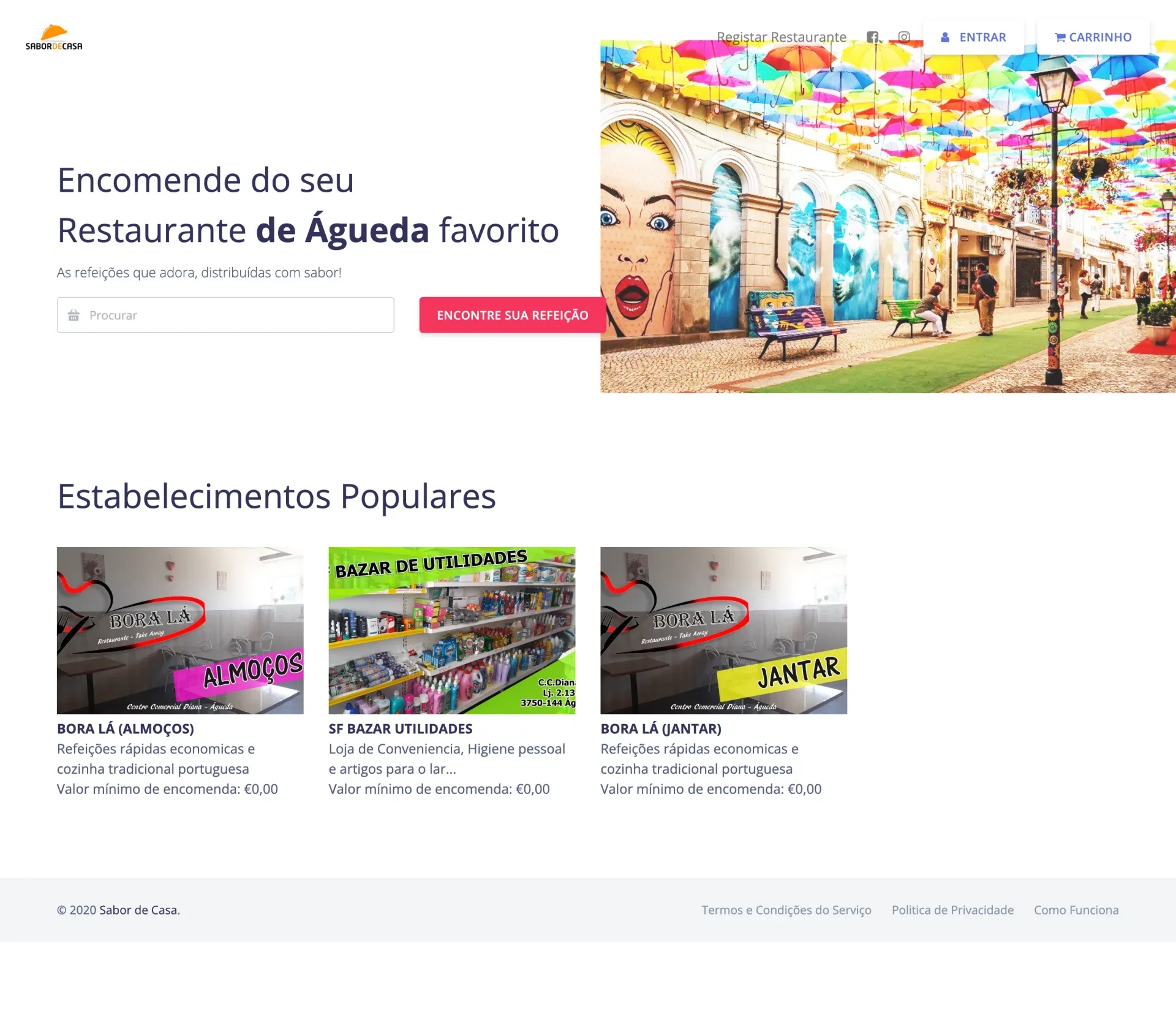
The existence of individual restaurant pages is supported by surviving historical references to the original website.
By bringing restaurant information together, the project aimed to make discovering dining options more convenient.
Digital Menus & Food Presentation
Digital restaurant menus were an important aspect of the platform's original use.
Providing menus online allows customers to review food selections and pricing before visiting an establishment.
For restaurants, this creates an additional way to communicate their offering and make product information more accessible.
Historical references to Sabor de Casa include links to individual restaurant menu pages hosted on the platform.
This provides evidence of the project's practical application as a digital restaurant information service.
The focus on menus also illustrates how a web application can address specific operational and communication needs within the hospitality sector.
User Experience & Accessibility
A restaurant-focused platform needs to make information easy to find and understand.
Visitors want to identify an establishment, explore its food offering and access relevant details without unnecessary complexity.
Sabor de Casa was conceived around this relationship between restaurants and consumers.
Its digital approach sought to bring together information that might otherwise be dispersed across multiple communication channels.
The project therefore placed particular importance on organising restaurant information within a dedicated online environment.
A Shared Platform for Different Establishments
Developing a platform for multiple restaurants involves different architectural challenges from building a single business website.
Each establishment needs its own identity and content, while the overall application must provide a consistent structure.
Restaurant profiles, menu information and other content need to be organised so they can be presented within the same digital system.
This type of project highlights the importance of information modelling, reusable software components and structured content presentation.
Sabor de Casa is therefore a relevant example of applying web application architecture to a specialised business model.
Digital Transformation in Hospitality
Digital transformation within the restaurant industry involves more than online payments and delivery services.
It also includes making information accessible, improving communication and helping customers discover establishments.
Sabor de Casa addressed this part of the digital experience by offering a specialist platform for restaurant profiles and online menus.
The project sought to connect local hospitality businesses with consumers using digital channels.
By doing so, it demonstrated how custom software could contribute to the modernisation of communication within the restaurant sector.
Beyond Traditional E-commerce
Sabor de Casa differed from a conventional online store because its central purpose was to support a restaurant-oriented digital platform.
Rather than focusing exclusively on product sales, the project addressed the presentation of establishments and their individual food offerings.
This distinction affected the organisation of the application, its content structure and its user experience.
It also made the project an example of how bespoke web development can support business models beyond traditional E-commerce.
The Legacy of Sabor de Casa
Although sabordecasa.pt is no longer operational, the project remains a relevant example of bespoke software development for the hospitality industry.
Its value lies in the approach taken: understanding the needs of a specific sector, designing an appropriate digital solution and translating those requirements into a dedicated web application.
Sabor de Casa demonstrated how technology could help restaurants present their businesses and make their menus accessible to consumers.
More than a conventional website, Sabor de Casa was a custom-built digital platform for restaurants, combining specialist web development, restaurant profiles, digital menus and a shared environment for discovering food establishments.
Sabor de Casa — Bespoke technology connecting restaurants and people.
// project details
- client
- Bora Lá
- year
- 2020
- platform
- Laravel · PHP à medida · HTML estático
- role
- Fullstack Developer
- Micro-Services
- System Administration
- Security Analyst
- Performance Optimization
- Maintenance & Support
- stack (26)
-
- PHP
- Laravel
- Composer
- MySQL
- HTML
- CSS
- JavaScript
- Docker
- REST API
- Node.js
- Linux
- Bash
- Nginx
- Apache
- LiteSpeed
- MariaDB
- Cloudflare
- SSH
- Cloudflare WAF
- ModSecurity
- Fail2ban
- Let's Encrypt
- Redis
- OPcache
- Cloudflare CDN
- php-fpm