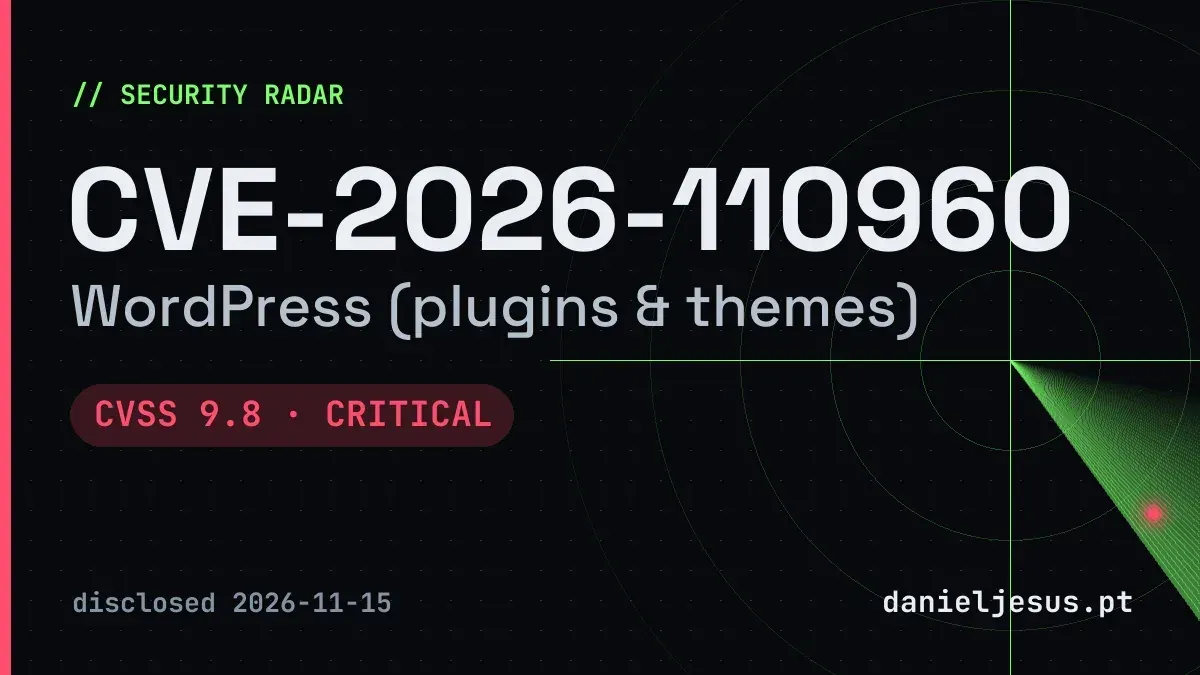
CVE-2026-110960: Critical Vulnerability in Auth Armor WordPress Plugin
The vulnerability in the Auth Armor plugin allows unauthenticated attackers to access API credentials.
// on this page (8)
Introduction
The CVE-2026-110960 vulnerability affects the Auth Armor plugin for WordPress, allowing unauthenticated users to access sensitive information and potentially compromise administrator accounts.
What happened?
The Auth Armor plugin, up to version 1.0.3, does not require authentication on several handlers available to logged-out users. This results in the exposure of stored API credentials, allowing an unauthenticated attacker to reset an administrator's enrollment and take over that administrator account.
How does the vulnerability work?
The vulnerability lies in the lack of authentication checks on certain access points of the plugin. When an unauthenticated user attempts to access these handlers, the system does not require valid credentials, allowing unauthorized access to critical information.
What is the real impact?
The impact of this vulnerability is considered critical, as it allows an unauthenticated attacker to gain access to sensitive credentials and compromise administrator accounts. This could result in unauthorized changes to the site, data theft, or even site downtime.
Which versions are affected?
- Auth Armor up to version 1.0.3
How to fix
- Update the Auth Armor plugin to the latest available version.
- Ensure that all API credentials are secure and not exposed.
- Monitor access logs for any suspicious activity.
Mitigation while you update
While it is not possible to update, it is recommended to deactivate the Auth Armor plugin to avoid any risk of exploitation. Additionally, reviewing access permissions and implementing additional security measures, such as two-factor authentication, is advisable.
Conclusion
The CVE-2026-110960 vulnerability in the Auth Armor WordPress plugin poses a significant risk to site security. It is crucial for administrators to update the plugin as soon as possible to protect their accounts and data.
// Fontes
- NVD — CVE-2026-110960 nvd.nist.gov ↗
- CVE.org — CVE-2026-110960 cve.org ↗
- WPScan wpscan.com ↗