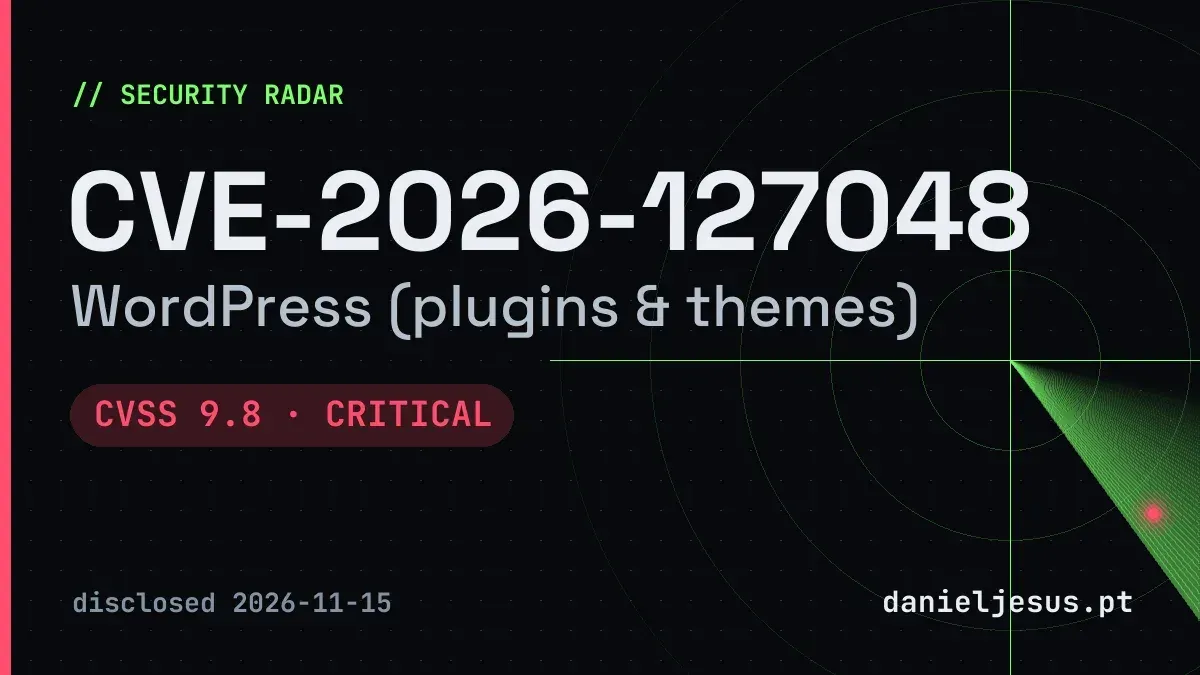
CVE-2026-127048: Critical Vulnerability in Custom Block Builder Plugin for WordPress
The vulnerability allows unauthenticated users to execute arbitrary PHP code on the server.
// on this page (8)
Introduction
The CVE-2026-127048 vulnerability affects the Custom Block Builder plugin for WordPress, allowing unauthenticated users to execute arbitrary PHP code on the server. This flaw is considered critical and should be addressed urgently.
What happened?
The Custom Block Builder plugin, in versions prior to 3.0.0, does not properly deny unauthorized requests to its REST routes. The plugin's permission checks return a non-error response, which WordPress treats as granted, thus allowing unauthenticated users to perform malicious actions.
How the vulnerability works
The vulnerability lies in how the plugin handles REST requests. When an unauthenticated user attempts to access a route that should be protected, the plugin does not return an error but rather a response that WordPress considers valid. This allows the unauthenticated user to execute arbitrary PHP code, potentially compromising the server's security.
What is the real impact?
The impact of this vulnerability is severe, as it allows attackers to execute arbitrary PHP code on the server. This can lead to total system compromises, theft of sensitive data, or even the use of the server for malicious activities. It is crucial for site administrators using this plugin to be aware of the risk and take immediate action.
Which versions are affected?
- Custom Block Builder before version 3.0.0
How to fix
- Update the Custom Block Builder plugin to version 3.0.0 or higher as soon as it becomes available.
- Check for security updates available for other installed plugins and themes in WordPress.
- Conduct a security audit on your site to identify and mitigate other potential vulnerabilities.
Mitigation while you update
While it is not possible to update the plugin, consider disabling the Custom Block Builder plugin to avoid any risk of exploitation. Additionally, implement further security measures, such as web application firewalls, to monitor and block malicious requests.
Conclusion
The CVE-2026-127048 vulnerability in the Custom Block Builder plugin for WordPress poses a significant risk to site security. It is essential for administrators to take immediate action to rectify this flaw and protect their systems.
// Fontes
- NVD — CVE-2026-127048 nvd.nist.gov ↗
- CVE.org — CVE-2026-127048 cve.org ↗
- WPScan wpscan.com ↗