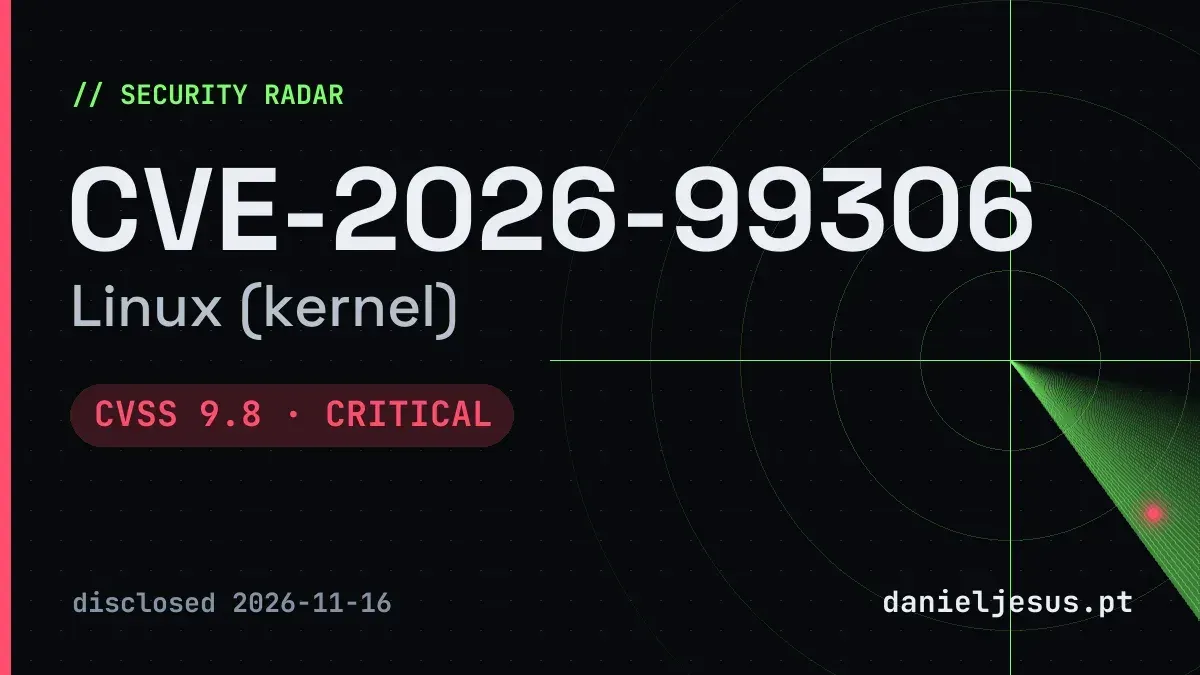
CVE-2026-99306 - Critical Vulnerability in Linux Kernel
A critical vulnerability has been identified in the Linux kernel affecting Ceph.
// on this page (8)
Introduction
A critical vulnerability has been identified in the Linux kernel related to Ceph, which may allow out-of-bounds memory reads, potentially affecting system integrity and availability.
What happened?
The vulnerability resides in the check_new_map() function of the Ceph MDS client. This function does not properly validate the number of ranks that can be announced by a monitor, allowing a map that claims more ranks than permitted by CEPH_MAX_MDS to be processed. This can result in out-of-bounds memory reads, leading to unexpected behaviors and potential system crashes.
How does the vulnerability work?
The check_new_map() function uses an export bitmap based on CEPH_MAX_MDS, but iterates over a value that may exceed the expected range. When a monitor sends a map with more ranks than the bitmap can support, it results in accesses to invalid memory addresses, which can cause system crashes and compromise security.
What is the real impact?
The impact of this vulnerability is classified as critical, as it may allow reading areas of memory that should not be accessible, affecting confidentiality, integrity, and availability of the system. Systems using Ceph for storage management may be particularly vulnerable, resulting in potential service disruptions and data loss.
Which versions are affected?
- Versions of the Linux kernel that include the Ceph functionality without the fix for this vulnerability.
The specific affected versions should be confirmed in the manufacturer's advisory.
How to fix
- Check the version of your Linux kernel and Ceph in use.
- Upgrade to the latest version of the Linux kernel that contains the fix for this vulnerability.
- Consult the manufacturer's security advisories for information on fixed versions.
- Test the update in a development environment before applying it in production.
Mitigation while you update
While it is not possible to apply the update, consider the following mitigation measures:
- Disable the use of Ceph in critical environments, if possible.
- Implement strict monitoring to detect anomalous behaviors in the system.
- Review security and access configurations to minimize risks.
Conclusion
The CVE-2026-99306 vulnerability in the Linux kernel poses a significant risk to the security and stability of systems using Ceph. It is crucial for system administrators and infrastructure managers to perform necessary updates and implement appropriate mitigation measures.
// Fontes
- NVD — CVE-2026-99306 nvd.nist.gov ↗
- CVE.org — CVE-2026-99306 cve.org ↗
- Linux kernel (git) git.kernel.org ↗
- Linux kernel (git) git.kernel.org ↗
- Linux kernel (git) git.kernel.org ↗
- Linux kernel (git) git.kernel.org ↗