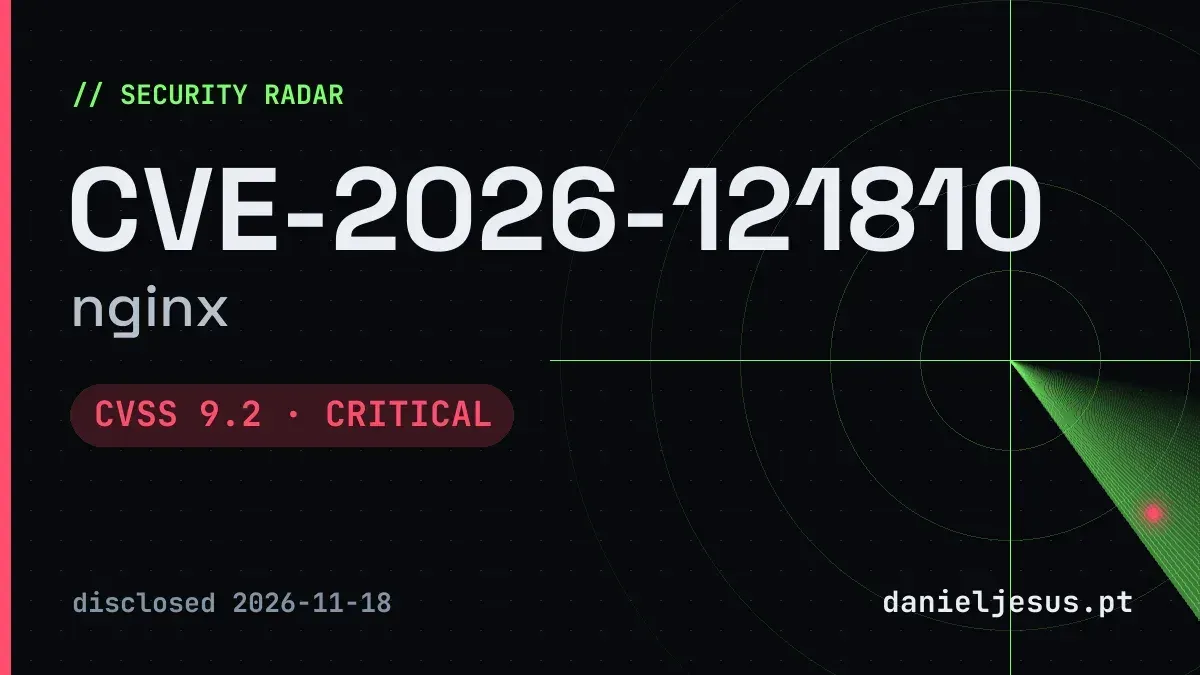
CVE-2026-121810: Critical Vulnerability in NGINX with HTTP/3
A critical vulnerability in NGINX may allow denial of service and code execution.
// on this page (8)
Introduction
The CVE-2026-121810 vulnerability affects NGINX Plus and NGINX Open Source configurations that use HTTP/3. This flaw allows a remote, unauthenticated attacker to trigger a use-after-free condition in the NGINX worker process, leading to a restart of the system.
What happened?
An attacker can exploit this vulnerability to cause a denial of service (DoS) on the NGINX system. Exploitation depends on conditions beyond the attacker's control. Furthermore, if the system has Address Space Layout Randomization (ASLR) disabled, the attacker may potentially execute code.
How the vulnerability works
The vulnerability arises from a use-after-free condition, which occurs when a program attempts to access a memory space that has already been freed. In the case of NGINX, this can lead to unexpected behaviors, including the restart of the worker process, affecting service availability.
What is the real impact?
The impact of this vulnerability is critical, as it may allow remote attackers to cause a denial of service on the NGINX system. Additionally, on systems where ASLR is disabled, there is an increased risk of malicious code execution.
Which versions are affected?
- NGINX Plus
- NGINX Open Source
Specific affected versions have not been disclosed and should be confirmed in the manufacturer's advisory.
How to fix
- Check the version of NGINX you are using.
- Refer to the manufacturer's advisory for information on fixed versions.
- Update to the fixed version as soon as it becomes available.
- Monitor systems for any suspicious activity.
Mitigation while you update
- Disable HTTP/3 if it is not necessary.
- Enable Address Space Layout Randomization (ASLR) if it is disabled.
- Implement firewall rules to limit access to NGINX.
Conclusion
The CVE-2026-121810 vulnerability poses a significant risk to systems using NGINX with HTTP/3. It is crucial for system administrators to take steps to address or mitigate this flaw as quickly as possible.
// Fontes
- NVD — CVE-2026-121810 nvd.nist.gov ↗
- CVE.org — CVE-2026-121810 cve.org ↗
- my.f5.com my.f5.com ↗