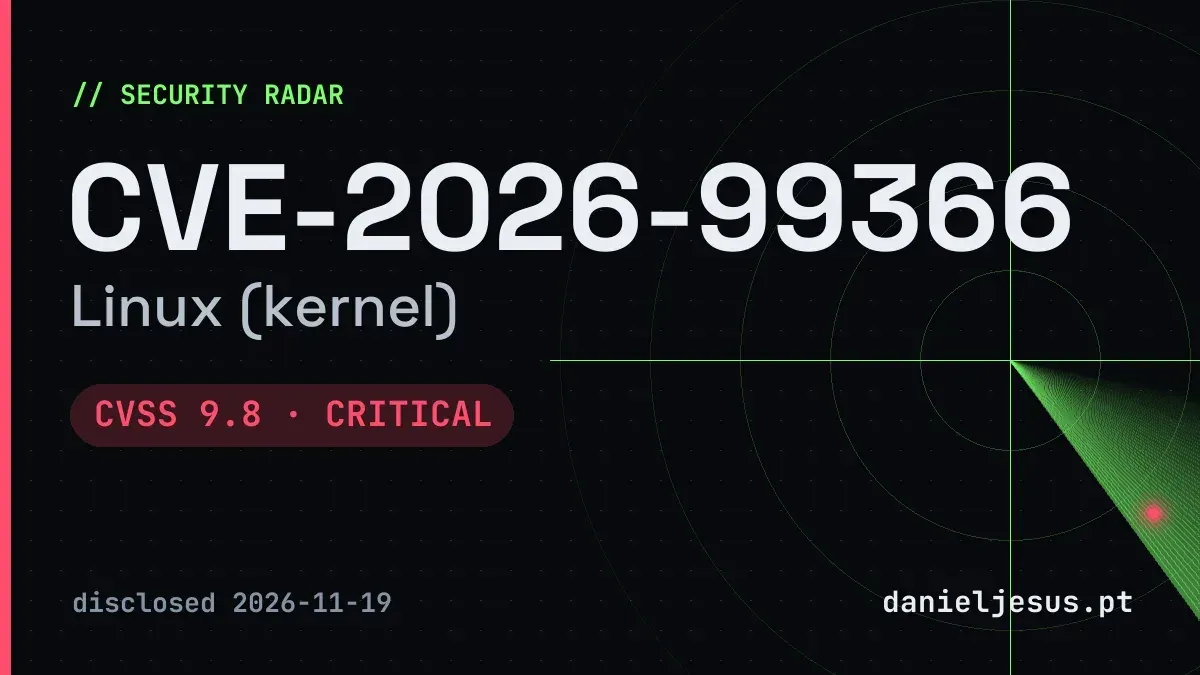
CVE-2026-99366: Critical Vulnerability in Linux Kernel
A critical vulnerability has been identified in the Linux kernel, affecting system security.
// on this page (8)
Introduction
A critical vulnerability has been identified in the Linux kernel, related to the Network File System (NFS). This flaw may allow an attacker to exploit session management and cause unexpected behavior in the system.
What happened?
The vulnerability lies in how the Linux kernel manages NFS sessions. The issue occurs when a reply is served from the reply cache without properly claiming the corresponding session. This can lead to a situation where multiple session replays can occur simultaneously, resulting in inconsistent states and potentially allowing an attacker to access sensitive information or cause system failure.
How does the vulnerability work?
The vulnerability is related to session state management in the kernel code. When a session is in use, the kernel must ensure that only one instance of the session is active at a time. However, due to a flaw in the control logic, it is possible for two different session replays to be processed at the same time, leading to unauthorized access to data or system failure.
What is the real impact?
The impact of this vulnerability is considered critical, as it may allow an attacker to cause a system failure or access sensitive information. Successful exploitation may result in a kernel panic, meaning the system may stop functioning correctly, leading to significant service disruption.
Which versions are affected?
- Linux kernel versions prior to 6.14
How to fix
- Check your Linux kernel version.
- Upgrade to the latest kernel version that includes the fix for this vulnerability.
- Consider applying security patches recommended by the Linux community.
- Reboot the system after the update to ensure changes are applied.
Mitigation while you update
While it is not possible to apply the update, it is recommended to:
- Limit access to the system to authorized users only.
- Monitor system logs for anomalous behavior.
- Disable NFS services if they are not needed to reduce the attack surface.
Conclusion
It is essential for system administrators and Linux server owners to be aware of this critical vulnerability and take the necessary steps to protect their systems. Updating the kernel is the best way to ensure system security and stability.
// Fontes
- NVD — CVE-2026-99366 nvd.nist.gov ↗
- CVE.org — CVE-2026-99366 cve.org ↗
- Linux kernel (git) git.kernel.org ↗
- Linux kernel (git) git.kernel.org ↗
- Linux kernel (git) git.kernel.org ↗
- Linux kernel (git) git.kernel.org ↗